Rome;
A 17°C grey-skied Christmas eve. Thanks a bunch global warming.
Thursday, December 24, 2009

Monday, December 21, 2009
Glistening white


Living holland with the snow has been wonderful. I've never been so sad about leaving the country during christmas period. Luckily I was not amongst the people who had to stick around the airport for over two days and I got away with a smooth two hour delay. I will never understand airport dynamics; they lost me after they nearly made a family miss their plane because it was absolutley necessary to scan the baby food at least twenty times.


Oegstgeest;
Leiden


These shots are not the best, I'm trying to learn how to both use my 30D and ligthroom whilst co-ordinating the 30 different colour profiles my screen seems to display. Excuses for the b&w but I was tempted. Time for festivities is always a good excuse for cheesy portraits. If only my cat was around, great things would happen.


I'll keep it short: happy holidays everybody.
Friday, December 18, 2009
CATS VS. DOGS (New Scientist article ©)
Feature of newest edition of the New Scientist - Most entertaining article I've read in a while. Thought I'd share.

THE world is divided into "dog people" and "cat people", each passionately believing that their preferred pet is superior. Until a decade ago, there was very little scientific evidence either camp could muster to support its claims. Then animal behaviourists became interested in dogs and unleashed a pack of ingenious experiments testing canine capabilities and cognition. Recently, researchers have started doing similar work with cats. Could it be time for that showdown?
There are obvious pitfalls in trying to use science to resolve this perennial dispute. Every pet-owner knows their furry family member is special - a unique being with its own talents and foibles. Yet scientific research tends to look at species as a whole and deals in averages and trends when attempting to quantify their characteristics. Then there is the thorny issue of comparing two very different animals. Some might argue that the whole venture is doomed to failure, but here at New Scientist we like a challenge. So we have pitted cats against dogs in 11 categories. It's a winner-take-all competition with "best in show" being awarded to the pet that prevails in the most categories. Let the fur fly...
1. BRAINS
At 64 grams, the average dog brain is far bigger than its feline equivalent, which weighs in at a mere 25 grams. But then the average dog is much heavier than the average cat. If instead you measure brain mass as a percentage of body mass, cats win by a whisker.
Felophiles should not gloat yet. In general, smaller mammals have slightly larger brains relative to their body size than bigger ones. This means cats' brains are exactly the mass you would expect for their size, whereas dogs have slightly more upstairs than you would predict.
On size alone, then, the results are ambiguous. That is perhaps all to the good, because brain size is not a reliable measureof intelligence. In fact, if you want to assess smarts you are far better looking at behaviour than crude neuroanatomy - more on that later. However, there is one anatomical measure that gives a pretty good indication of information processing capacity: the number of neurons in the cortex, or executive brain. Here cats trounce dogs, with 300 million neurons compared with a piddling 160 million (Trends in Cognitive Science, vol 9, p 250).
WINNER: CATS
RUNNING SCORE: CATS 1 - 0 DOGS
2. SHARED HISTORY
Several research teams have compared DNA from dogs with that of grey wolves, their closest living ancestor, to try to pinpoint the date of domestication.
In the first study of this kind in 1997, Robert Wayne's team at the University of California, Los Angeles, came up with a date of 135,000 years ago. Since then, the entire dog genome has been sequenced and Wayne now believes his date may be a little premature. Nevertheless, given the discovery of archaeological remains of dogs dating from 31,000 years ago and the large divergence between dog and wolf DNA, he still suspects that domestication occurred at least 50,000 years ago.
Other DNA studies, however, suggest domestication could be more recent. The latest analysis, published in September by Peter Savolainen at the Royal Institute of Technology in Stockholm, Sweden, comes in at 16,000 years. It also points to an origin south of the Yangtze river in China and speculates that the first dogs were not working dogs, but destined for the dinner table (Molecular Biology and Evolution, vol 26, p 2849).
Our knowledge of feline domestication is also fuzzy. Evidence from ancient Egyptian burials and hieroglyphs indicates that cats were popular in homes from about 3000 BC onwards. However, the synergy with humans probably stretches further back. As soon as our ancestors began farming, their grain stores would have become magnets for vermin, and therefore cats. In 2007, comparisons of the DNA of wildcats from across the globe with that of domestic cats confirmed their origins in the Fertile Crescent east of the Mediterranean, the cradle of agriculture (Science, vol 317, p 519). What's more, cats seem to have wormed their way into our homes and hearts from an early stage, as evidenced by a 9500-year-old burial of a kitten alongside a human on Cyprus. While impressive, it still leaves Felix looking like a newcomer compared with Fido.
WINNER: DOGS
SCORE: CATS 1 - 1 DOGS
3. BONDING
The bond between a dog and its owner is remarkably similar to that between a parent and child. A secure baby behaves in a characteristic way in strange situations: it is courageous and happy to explore while its mother is around, becomes distressed when she leaves, will settle with a stranger in time, but has eyes only for mum when she returns.
Dogs put through the "strange situation" test respond in the same way. That is probably no surprise to dog people, who often cite unconditional love as their pet's more endearing quality. Are cats so very different?
Adam Miklosi from Eotvos Lorand University in Budapest, Hungary, whose group did the work with dogs, tried this experiment with cats - but they were having none of it. The lab setting was very upsetting and stressful for them, presumably because cats tend not to leave their territory. Nevertheless, Miklosi suspects that cats bond with their owners in much the same way that dogs do - if only he could persuade them to take the test.
Even the most besotted owner will admit that cats like their independence. Evolution is to blame. By nature, cats are loners. Dogs, meanwhile, are descended from pack animals and have an instinct to affiliate, and domestication has changed the focus of this instinct. Give a 4-month-old puppy the choice and it will choose a human companion over a dog. It seems they just can't help but love us.
WINNER: DOGS
SCORE: CATS 1 - 2 DOGS
4. POPULARITY
Arguably the ultimate test of whether an animal makes a good pet is how many people actually own them. Here cats are clear winners. Although worldwide figures are hard to come by, recent studies show that in the top 10 cat-owning countries there are almost 204 million felines. Pet pooches in the top 10 dog-owning countries number fewer than 173 million.
WINNER: CATS
SCORE: CATS 2 - 2 DOGS
5. UNDERSTANDING
Rico the border collie is famously able to understand over 200 words (Science, vol 304, p 1682). He's a clever boy, but even dogs with more limited comprehension can often recognise and respond to dozens of commands and requests for objects. And words are not the only channel of communication open to them.
Pooches can follow human pointing gestures, such as an outstretched finger or a nod of the head, to find food. That may not seem impressive, but chimps struggle to do it. Dogs also hold eye contact with humans - which wolves tend not to do - and use gaze alternation to bring objects to their owner's attention. They seem predisposed to inspect our faces for information, reassurance and guidance, according to Alexandra Horowitz who studies animal cognition at Columbia University in New York, and whose book Inside of a Dog was published in September.
However, Horowitz provides a cautionary tale for anyone tempted to overestimate their dog's level of comprehension. Her experiments revealed that a pooch's characteristic "guilty look" does not in fact signify an understanding of transgression, but is often simply produced in response to a scolding, regardless of whether or not it has been disobedient (Behavioural Processes, vol 81, p 447).
Cognitively speaking, cats are similar to dogs, says Miklosi, so you would expect them to have similar patterns of behaviour and abilities. A big difference is that they are not compliant or motivated, making them devilishly hard to work with. Nevertheless, Miklosi's team found that Felix is just as capable as Fido when it comes to following pointing gestures to find food. However, if the food is hidden and impossible to retrieve, dogs are far more likely to solicit help from their owners by gaze alternation, whereas cats mostly try in vain to obtain the reward for themselves (Journal of Comparative Psychology, vol 119, p 179). Understanding that humans can get you what you want may seem like cheating, but add to this the dog's superior vocabulary and eagerness to engage with its owner and it is only fair they win this one.
WINNER: DOGS
SCORE: CATS 2 - 3 DOGS
6. PROBLEM SOLVING
"Cats don't understand string theory" ran the headlines earlier this year after an experiment showed that if you offer kitty a choice between two pieces of string, one with a morsel of food at the end, they often fail to pull on the string attached to the reward (Animal Cognition, vol 12, p 739). Before canine-lovers crow... dogs do not pass the test either.
What's more, neither pet can use figurative cues to find hidden food. In other words, they don't understand X marks the spot. On the positive side, both are pretty good at retrieving bits of food from stashes placed at various distances from each other and from themselves. Although they employ slightly different strategies, their choices about the order in which they visit sites is efficient and logical (Behavioural Processes, vol 73, p 22).
Not much else is known of cats' problem-solving capabilities. Dogs have been subjected to far more testing, and have often failed to shine. In fact, there is a long-standing view that dogs are dunces compared with their wolf cousins, whose brains are a third bigger. One classic study showed that wolves learned to open a door with a complicated catch simply by watching another wolf do it, whereas dogs failed to master the catch even after years of seeing the door opened and closed.
But Miklosi, along with Jozsef Topal of the Hungarian Academy of Sciences in Budapest, suspected that a dog's partnership with its owner might be making it appear more stupid than it really is. The more intimate the bond, they reasoned, the more likely a dog is to relinquish its powers of independent thought and action to its owner.
Their suspicions were confirmed when they tested a variety of dogs on a task in which they had to pull on the handles of a plastic dish protruding from underneath a wire fence to retrieve some food. The most highly bonded dogs performed worst - but their success rate improved as soon as their owners encouraged them. The researchers conclude that dogs are not poor problem solvers, per se, but tend to favour a collaborative approach.
The full genius of this strategy is only revealed when you consider seeing-eye dogs. In their collaborations with blind owners, they often take the usual canine role of junior partner, but when the need arises they step in to solve problems their human cannot master. Chalk one more up to the small-brained wolf.
WINNER: DOGS
SCORE: CATS 2 - 4 DOGS
7. VOCALISATION
Shared ancestry means that all mammals tend to produce the same kinds of vocalisations to convey certain meanings. For example, they make sudden sounds with rising or rapidly fluctuating pitch to attract attention or demonstrate arousal, motivation or readiness. Both cats and dogs play on this mammalian mutual understanding in their vocal interactions with humans. Analysis of cat miaows reveals that they contain acoustic patterns that grab our attention. But the vocal repertoire of cats is quite limited and their calls tend to be idiosyncratic, so they are often interpretable only by their owners.
Dogs have far more vocal flexibility. They can vary the length, range, pitch, frequency modulation and tonality of their barks and they use this ability to produce characteristic barks in different situations. Even someone who has never owned a dog can make a good stab at telling, simply from its barks, whether it is lonely, aggressive or happy. Miklosi's group, who made this discovery, point out that other adult canids, including wolves, rarely bark. He suggests that during the course of domestication dogs may have evolved their elaborate vocal repertoire especially to communicate with us (New Scientist, 12 June 2004, p 52).
That's clever, but complexity is not everything. After all, no matter how much you love your pet, the barking or miaowing can get on your nerves. It looks as though cats may have found a way around this, though. A study published earlier this year reveals the subtlety with which they can use their crooning to ensnare us. By embedding an urgent high-frequency miaow into a blissed-out purr, they produce a sound that brings out our nurturing side. Karen McComb from the University of Sussex in Falmer, UK, who analysed these "solicitation purrs", suggests they work on a subliminal level in much the same way as a baby's cry, which has a similar frequency range (Current Biology, vol 19, p R507). For their guile, cats get the cream.
WINNER: CATS
SCORE: CATS 3 - 4 DOGS
8. TRACTABILITY
Dogs are easy to train because we have selected them to be so. They have evolved to fit into our homes and meet our needs, and they find it easy to learn and obey our rules. They are especially skilled at cognitive tasks that require cooperation and sharing information to achieve a goal.
While other animals such as chimps and dolphins learn by emulation - watching another individual carry out a task and then trying to achieve the same result - dogs learn in the same way as human infants. This process, called pedagogy, entails implicit teaching, with the dog attending to cues such as eye contact, gesture and vocalisation, and then directly imitating the actions of its master (New Scientist, 23 August 2008, p 33).
The most basic way to train a dog involves reinforcing the behaviours we want to encourage by giving Fido a titbit of food. Cats can be taught using rewards too. "They respond to stimulus and reinforcement," says Miklosi. But since no one has really tried training cats, we do not know the full extent of their abilities. Although there may be fewer ways to do it, they can probably achieve similar ends to dogs, Miklosi believes. "But dogs really want to do it. They are more interested and take it more seriously."
Besides, even without explicit instructions dogs naturally pick up the rules of domestic behaviour. This happens through play, according to renowned animal behaviourist Marc Bekoff of the University of Colorado, Boulder. He argues that the function of rough-and-tumble play is to develop a rudimentary sense of morality, and that such interactions with their owners allow dogs to test the limits of what is acceptable in a domestic setting. Dogs win paws down.
WINNER: DOGS
SCORE: CATS 3 - 5 DOGS
9. SUPERSENSES
Smell, sight and hearing are the most important senses for both cats and dogs. Having created endless breeds of dog to capitalise on their various perceptual talents, we should expect them to outperform the less highly selected cat - and they do show some quite amazing abilities. A bloodhound's nose, for example, contains 300 million smell receptor sites compared with just 5 million in humans. Its sense of smell is up to 100 million times more sensitive than yours.
However, while a dog's keen nose is legendary, cats are no mean sniffers either. In fact, because there is so much variability among breeds of dog, the average cat, with its 200 million smell receptors, actually has a more acute nose than the average dog.
Neither Felix nor Fido can match us when it comes to visual acuity, but their ancestry as nocturnal hunters has left them with some impressive visual abilities. Both have a faster "flicker-fusion rate" than we do, meaning the cells in their retinas take more snapshots of the world per second than ours, giving them superior sensitivity to movement. The main reason for this is that their eyes contain many more rod cells than cones, which also explains their poor colour vision. On the up side, rods are particularly good for seeing in low light. Here, once again, cats have the upper hand. Felix can see in light levels six times as low as we can, while Fido's limit is thought to be about five times ours.
Add hearing to the list, and cats score a hat trick. Their auditory range extends from 45 to 64,000 hertz, far wider than that of dogs at between 67 and 45,000 hertz.
WINNER: CATS
SCORE: CATS 4 - 5 DOGS
10. ECO-FRIENDLINESS
Cats love wildlife - in the UK alone they kill more than 188 million wild animals each year. But dogs are no bunny huggers. They have been implicated in the decline of the rare European nightjar, they disturb ground-nesting birds and, even when walked on a lead, their mere presence may reduce biodiversity (Biology Letters, vol 3, p 611).
The real difference in ecological impact comes in consumption. A medium-size dog's ecological footprint - the area of land required to keep it fed - is 0.84 hectares annually. You could run two SUVs on that and still have change. Even a toy dog such as a chihuahua has a footprint of 0.28 hectares per year. Meanwhile, your average cat's ecological pawprint, at just 0.15 hectares, looks positively virtuous (New Scientist, 24 October, p 46).
WINNER: CATS
SCORE: CATS 5 - 5 DOGS
11. UTILITY
Dogs can hunt, herd and guard. They can sniff out drugs and bombs and even whale faeces; they guide blind and deaf people, race for sport, pull sleds, find someone buried by an avalanche, help children learn and possibly even predict earthquakes. Cats are good if you have an infestation of rodents.
Perhaps that assessment is unfair, though. After all, we love our pets for other reasons. Cats are beautiful and soft, and stroking them has been shown to reduce stress. Then again, dogs are also good stress-busters: owning one can lower your blood pressure and cholesterol levels. What's more, Fido has other health benefits. Daily dog walks may be a chore, but they repay the effort, not just in terms of regular exercise, but also by providing immune-boosting opportunities for social contact with other dog walkers. That's why in a head-to-head contest of health benefits, it's dogs all the way (British Journal of Health Psychology, vol 12, p 145).
WINNER: DOGS
SCORE: CATS 5 - 6 DOGS
Monday, December 14, 2009
End of First Term


It has been a bizarre past couple of months. I have taken it all in, and let me tell you; I am exhausted. I wish I could say I'd be able to say I have been overwhelmed with work rather than with people but I'm sure I've learnt a thing or two either way. Time to set off for 3 weeks and come back for a healthy start on my new modules; which I am planning to take more seriously, if not seriously at all. I don;t understand how this environment is intended as work-stimulative.
I really ought to be documenting all the exciting things going on in the city rather than what's going on in my tiny den, but hopefully the new year will bring me an stimulus to do that too.
Helllllooo winter break.
I really ought to be documenting all the exciting things going on in the city rather than what's going on in my tiny den, but hopefully the new year will bring me an stimulus to do that too.
Helllllooo winter break.


Wednesday, November 4, 2009
Only I could live a more hectic life in Holland than the capital of the world.
I am currently working on a short Cine-Semiotic analysis of Werner Herzog's "The Wild Blue Yonder":
It is an absolute mindfuck in the most subtle, intelligent way possible.
I'm quite dissapointed I didn't find out about Herzog earlier this month
as it was basically Werner Herzog month in London for the whole of October.
I'm quite dissapointed I didn't find out about Herzog earlier this month
as it was basically Werner Herzog month in London for the whole of October.
Thursday, October 8, 2009
Minty mornings in the city that never sleeps.

I could say I haven't found time to write anything, but I'd be lying. More like I haven't thought of anything worth writing without the help of visuals.
The above is my current window view; one of the 380 in Loring Hall, one of the 36 in Block G, one of the 6 in Appartment 5. Trains go past every few minutes. I thought I'd be driven insane in no time, but trains turn out to be a surprisingly pleasant wake-up call, especially when waking up to a blue sky after 4 days of rain. Naturally we only are blessed with this weather on the day where I have more than 2 hours of class.
Today I have to illustrate for 6 hours. That sounds about as realistic as me doing anything during IB art class. Aside from lectures I am finding University an even less intimidating environment than high school, although I'm trying my best to not assume my arrogant high school attitude by staying as tame as possible.
I still need to go into central London ten more times before I realize I am actually a resident of the capital of the world; the view of Canary Wharf in the distance still seems slightly surreal. I guess that at least cleaning my own room, washing my own clothes and cooking my own food are activities that have become very natural in no time... That's with the exclusion of how terrified I am of destroying my clothes by setting the washing machine wrong.
I promise I will have wonderful things to actually write about once I get going.
ROGER, out.
Saturday, September 19, 2009
Thursday, September 10, 2009
Work complete
If for whatever reason in my life I encounter a situation of volountary yearbook work, I will thoroughly avoid it. I didnt think such a superficial product could take so much work. I'm never ever taking up an editor's job.
I can't even work with photoshop so here I present some of my cutting and pasting skills:

In other news I failed my driving practical miserably, and went to see Inglorious Basterds to cheer myself up. I enjoyed it way more than expected... I'm starting to think even a little too much because everyone I've spoken too either didn't like it, or liked it but is quite spektical about some scenes. I went to watch at it in an empty cinema in the early afternoon, and I think I have never in my life been such an active specatator.
Eight days till the new life, ay.
Tuesday, September 8, 2009

Thursday, September 3, 2009
Writing from Rome
I've been busy, I'm not sure with what, but I must've been, as I found no space in my mind to write here.
I am currently trying to find out where I can view this much spoken of "scandalous" documentary by Italo-Swedish director Erik Gadini. It's premiere national date is supposedly tommorow, but now all Cinemas will be showing it. Also the fact that any TV-related publicity has been strictly prohibited makes it kind of hard to find out anything. I'm really excited. I hope all the hype that has built up around it means that it sends across the needed message, loud and clear.
Thursday, August 20, 2009
Future becomes a reality...
So, after struggling with UCAS and bad, bad hotel internet I was surprised to find out that after basically asking Goldsmiths to reject me because I knew I wouldn't get in, I have "Cogratulations!" been "accepted to the Goldsmiths' Media and Communications course starting this September".
I am really glad to be moving to New Cross after all, and also happy I'll be doing some creative stuff for the next 3 years, with lots of good equipment to work on my photography, video-editing and perhaps even music. I just hope the environment doesn't get to my head.
Also, the prospect of not living through University with Sofia is kind of terrifying. I guess I at least already know some of the big (self-proclaimed) sleazy boys from the last year, so I already have a base. Okay, so I'll be writing from New Cross, London as of September 20th. Exciting.
(I'll write about the continuation of my holiday when I get home tommorow, packing).
I am really glad to be moving to New Cross after all, and also happy I'll be doing some creative stuff for the next 3 years, with lots of good equipment to work on my photography, video-editing and perhaps even music. I just hope the environment doesn't get to my head.
Also, the prospect of not living through University with Sofia is kind of terrifying. I guess I at least already know some of the big (self-proclaimed) sleazy boys from the last year, so I already have a base. Okay, so I'll be writing from New Cross, London as of September 20th. Exciting.
(I'll write about the continuation of my holiday when I get home tommorow, packing).
Monday, August 17, 2009
Santa Monica

Yesterday we took a short trip down to Santa Monica. Not really my kind of place but quite fun to look around, and I finally took photos of some people. Unfortunatley my zoom broke, my lens is perenally dirty and I can never take decent metering with such bright sunlight.


We ate at the note Bubba Gump. I still didn't quite look into why it's Forrest Gump themed (also because I still have not seen the movie itself), but eating so much Shrimp was pretty exciting. Can't say my stomach was ultimatley as delited as my palate after this feast.


We then sat down on a patch of grass to listen to some Jazz band, but we had to leave before it even started because my dad drank some grape Fanta and had a massive allergic reaction to we are not sure what.


Sorry for the brief sentences but I didnt get a lot of sleep. I'm staying with Clara for the next couple of days, really excited!
Friday, August 14, 2009
Buffalo Belly
In case you are wondering about the title, it is my Red Indian name, awarded to me by my loving father. Only title I could think of which sums up exploring more natural parks, discovering how amazing local Apple pie is and expanding my collection of Native American portrait postcards.
Yesterday we finally took a decent walk. We took a route down Bryce Canyon, and exploring it from the low levels made it overall a way greater Canyon experience than the Grand Canyon. Had I had the option I would've picked to take this stride NOT right in the middle of the day, but it was still definitely worth the sweat. We also found some more great gift shops, where I purchased my long awaited Utah sweater (quite a stylish one too, only has a small moose logo with a Utah written under it) and was given a pair of train-shaped earrings for free.


(Sorry about the condensation on my lens.)
Today we decided to check out Zion Park. My sister had been expressing the desire to horse ride for some time. Despite my initial resistance I'm quite happy we did so. I thought I'd be terrified and that me and the horse wouldn't work out; but all went smoothly. I rode a nice calm horse called Fender, my sister on the biggest horse of them all, named Leroy and my dad one called HB (for a second I thought it was called HD, so dissapointing). My mum's was a lazy, old horse called Buttercup. I won't elaborate but she was defintiley the most hysteric horse rider of the entire group, her and her horse would've made for a good skit.


Tomorrow we're going to LA. Can't wait to see Clara, but I'm going to miss the atmosphere around here. This morning I witnessed such a priceless scene, just when I thought the mother and middle aged son with matching shirts was unbeatable. There is a girl who works at the local grocery who I've nicknamed "Storm Girl", because the only time we walked into the store the air conditioning was so high that pieces of paper were literally flying around. She's a big girl, not as in fat, but almost, say, like a female viking; her hair is bleached blond and she wears wife beaters, ripped jeans and cap. She's EXACTLY the kind of girl you find in a place like Mt Caramel Junction, to such an extent that it took me a while to become accustomed to her existence. Anyway, this morning I saw her sitting at the diner gossiping about some "guy who was really hot" to a man who must have been at least 70, and far too distracted by the food on his plate. It was such a classic scene, me and my sister couldn't help but crack up under our breath for the whole of breakfast. If I ever find myself writing the plot of a comic I'd love to use her as a main character, it would work so well.
That's all for now. Byebye Utah :(.
Yesterday we finally took a decent walk. We took a route down Bryce Canyon, and exploring it from the low levels made it overall a way greater Canyon experience than the Grand Canyon. Had I had the option I would've picked to take this stride NOT right in the middle of the day, but it was still definitely worth the sweat. We also found some more great gift shops, where I purchased my long awaited Utah sweater (quite a stylish one too, only has a small moose logo with a Utah written under it) and was given a pair of train-shaped earrings for free.
(Sorry about the condensation on my lens.)
Today we decided to check out Zion Park. My sister had been expressing the desire to horse ride for some time. Despite my initial resistance I'm quite happy we did so. I thought I'd be terrified and that me and the horse wouldn't work out; but all went smoothly. I rode a nice calm horse called Fender, my sister on the biggest horse of them all, named Leroy and my dad one called HB (for a second I thought it was called HD, so dissapointing). My mum's was a lazy, old horse called Buttercup. I won't elaborate but she was defintiley the most hysteric horse rider of the entire group, her and her horse would've made for a good skit.
Tomorrow we're going to LA. Can't wait to see Clara, but I'm going to miss the atmosphere around here. This morning I witnessed such a priceless scene, just when I thought the mother and middle aged son with matching shirts was unbeatable. There is a girl who works at the local grocery who I've nicknamed "Storm Girl", because the only time we walked into the store the air conditioning was so high that pieces of paper were literally flying around. She's a big girl, not as in fat, but almost, say, like a female viking; her hair is bleached blond and she wears wife beaters, ripped jeans and cap. She's EXACTLY the kind of girl you find in a place like Mt Caramel Junction, to such an extent that it took me a while to become accustomed to her existence. Anyway, this morning I saw her sitting at the diner gossiping about some "guy who was really hot" to a man who must have been at least 70, and far too distracted by the food on his plate. It was such a classic scene, me and my sister couldn't help but crack up under our breath for the whole of breakfast. If I ever find myself writing the plot of a comic I'd love to use her as a main character, it would work so well.
That's all for now. Byebye Utah :(.
Wednesday, August 12, 2009
Zion, UTAH
The vast red rocky landscapes remind me of what I thought Mars would look like before I'd ever seen any pictures. It's good to be back in the middle of nowhere. I already spotted a fresh fruit shop and a coffee house that sells homemade pie next to the hotel.
EDIT:
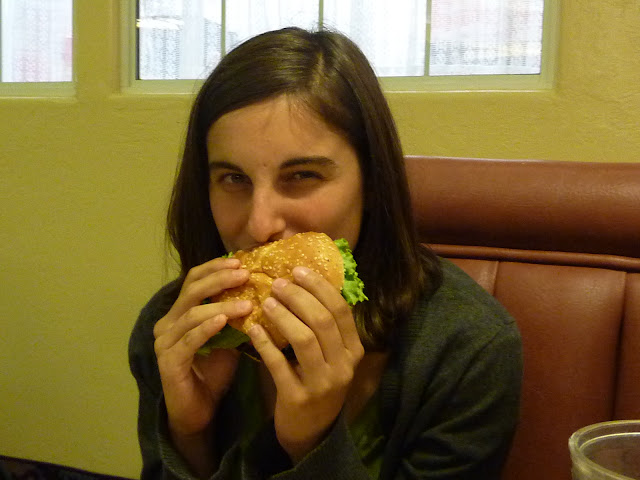
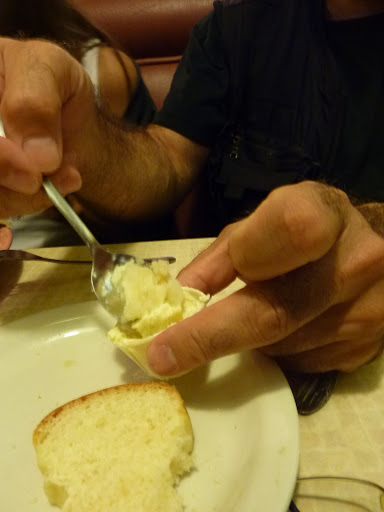
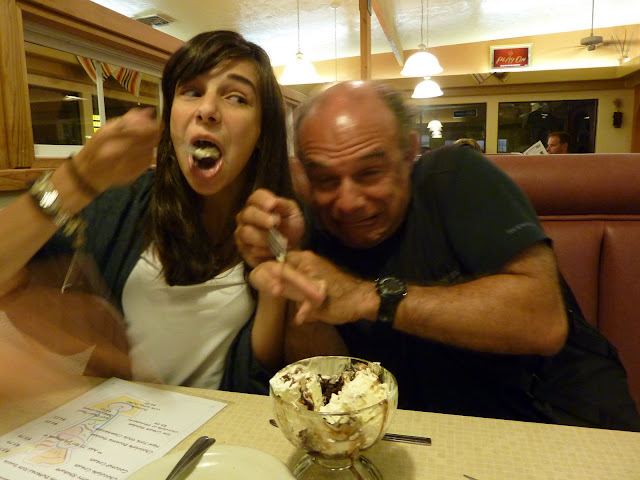
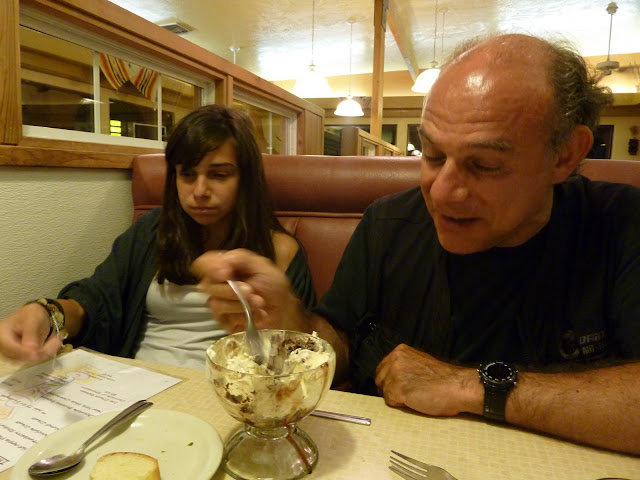
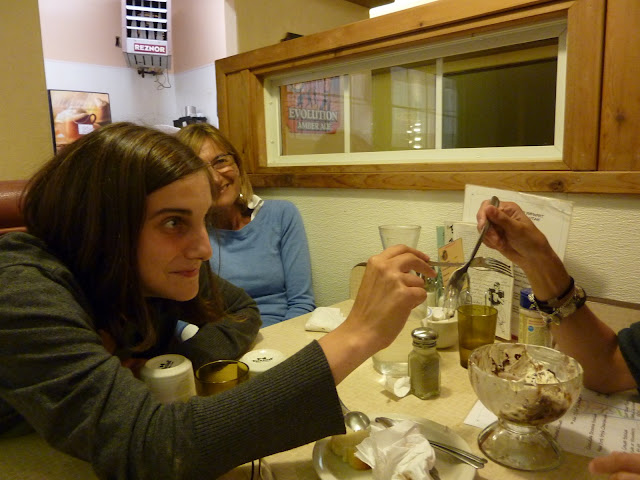
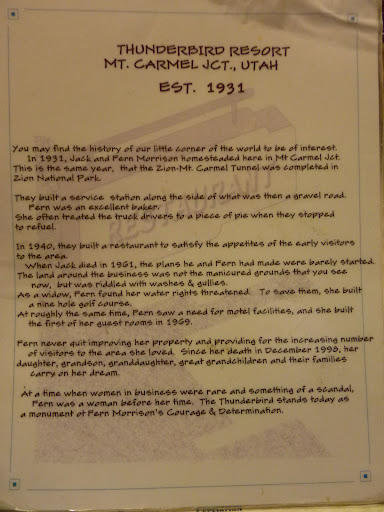
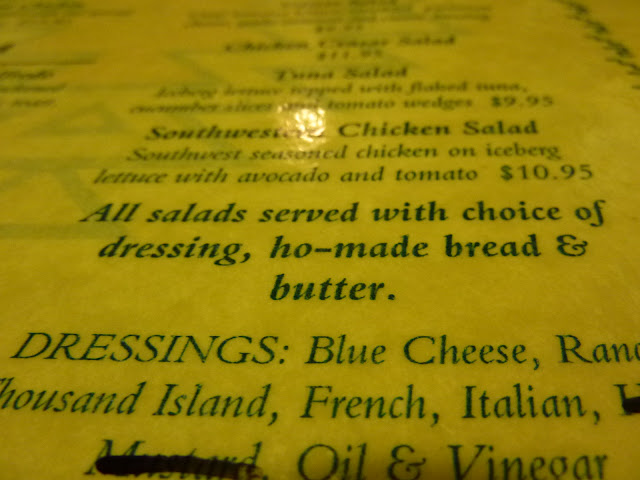
The gift shops here are awesome, filled with native american-themed objects. I knew I'd end up loving this overly isolated place too. After venturing into Orderville to find a restaurant, it turned out the most, or only, civilized area consists in that surrounding our hotel. So we went to eat at the Thunderbird Resort Diner. Its history is actually quite impressive ( read here) and the "ho-made" butter and bread were pretty fucking awesome, as well as the rest of the food. The staff wasn't exactly friendly, and definitley far from promiscuous looking (despite the HO theme), but a pretty enjoyable meal. Some footage of my american burger eating, my dad spooning out butter after an already exagerated meal, and our usual fight over the dessert that only my sister dares to order:
EDIT:
The gift shops here are awesome, filled with native american-themed objects. I knew I'd end up loving this overly isolated place too. After venturing into Orderville to find a restaurant, it turned out the most, or only, civilized area consists in that surrounding our hotel. So we went to eat at the Thunderbird Resort Diner. Its history is actually quite impressive ( read here) and the "ho-made" butter and bread were pretty fucking awesome, as well as the rest of the food. The staff wasn't exactly friendly, and definitley far from promiscuous looking (despite the HO theme), but a pretty enjoyable meal. Some footage of my american burger eating, my dad spooning out butter after an already exagerated meal, and our usual fight over the dessert that only my sister dares to order:
Subscribe to:
Posts (Atom)